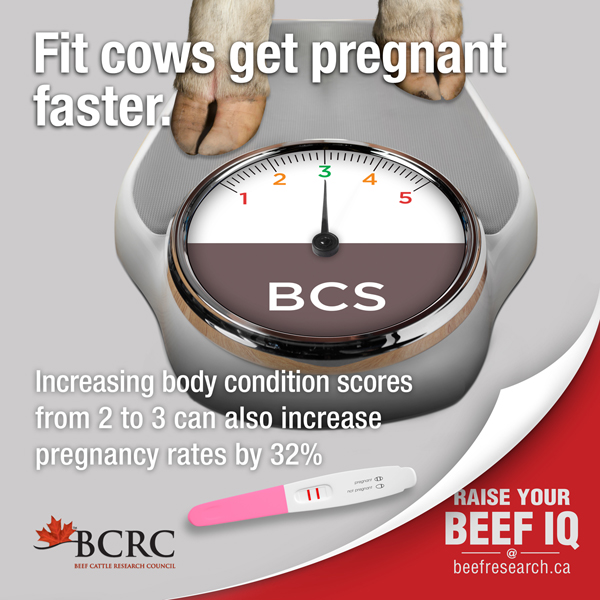
Optimum body condition = maximum production
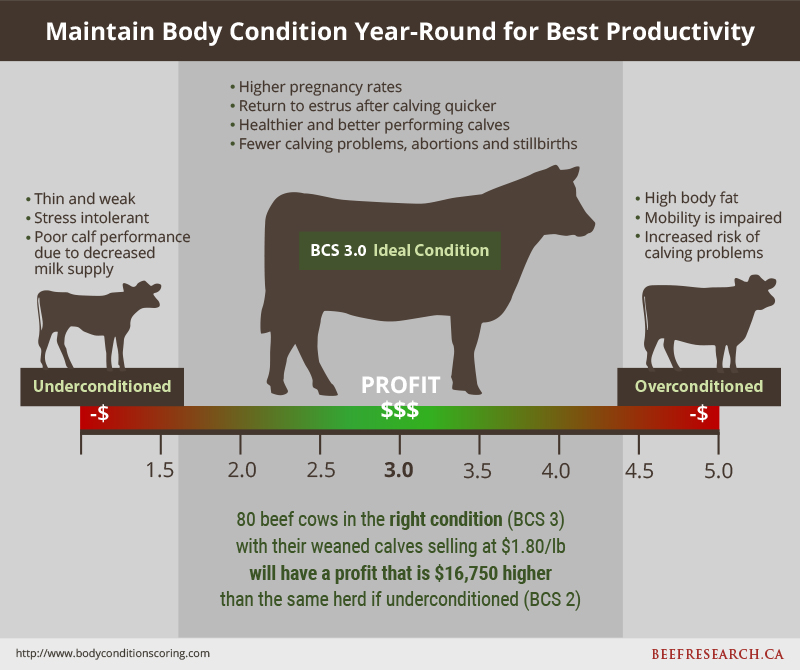
The productivity of beef cattle depends largely on the amount of fat they carry. A herd of cattle maintained in the right condition with an ideal layer of fat cover will breed back more efficiently and wean heavier calves than a herd of thin or over-fat cattle.
What is body condition scoring?
Body condition scoring (BCS) is a low cost, hands-on method to determine the condition (amount of fat cover) cattle have. This easy hands-on method is much more accurate than just looking at animals.
Looks can be deceiving, even to the trained and experienced eye. The shadows that help you see the body’s dips and hollows are harder to see on black cattle. The accuracy of visual evaluation also varies with the season. Prominent rib, hook and pin bones can be masked by long winter hair coats. Thin cattle with round bellies full of straw can be mistaken as being in ideal condition when, in fact, they need improvement.
Research from the University of Guelph1 reported that even trained visual evaluators had a hard time accurately predicting the body condition score of cattle in winter. The correlation between visual scores and ultrasonic backfat measurements was low (r2 = 0.14) in January to March. Cows in later stages of pregnancy may also appear to have more fat cover. A hands-on evaluation of the body condition score will give you a much better sense of cattle fat stores.
In Canada, body condition is scored from 1-5, with 1 being extremely thin and 5 being obese. A score of 3.0 is ideal.

| Body Condition Score System | |
|---|---|
| Canada | American (U.S.A) |
| Underconditioned/Thin | |
| 1 | 1 |
| 1.5 | 2 |
| 2 | 3 |
| Right Condition / Optimum | |
| 2.5 | 4 |
| 3 | 5 |
| 3.5 | 6 |
| Overconditioned/Fat | |
| 4 | 7 |
| 4.5 | 8 |
| 5 | 9 |
How do I body condition score?
Feel for fat cover with your hands at:
- the short ribs
- the spine
- the hooks and pins
- either side of the tail head
An animal in ideal condition will have a thin layer of fat in these areas, so it will take some pressure to feel the bones.
An underconditioned animal’s bones will be quite prominent and sharp. In an obese animal, you won’t be able to feel any of the individual bones through the thick layer of fat.
See a demonstration in the video below.
Why is measuring body condition in cows worthwhile?
By having an accurate measure of your cows’ body condition, you’ll have a good indicator of how to manage rations to maximize their productivity, especially reproduction.
Cows with an ideal body condition score (3.0) rebreed up to 30 days sooner than thin cows, which allows more cows to calve in the first 21-day cycle. This can add up to 42 lbs in calf weaning weight since the calves born earlier in the calving season will be heavier at weaning time. Cows in ideal body condition also have pregnancy rates double those of cows in poor condition, improved milk production, fewer cases of abortion and stillbirth, healthier calves and fewer instances of calving problems.
The salvage value of cull cows in good condition is also higher. Very thin cows are more likely to experience negative outcomes during transport or to be condemned at the plant. Thin cows reflect poorly on the producer and the industry. It is important to note that thin cows are not always strictly related to nutrition. Several diseases such as Johne’s disease can be a contributing factor to thin cows.
Impact of Body Condition on Cow Productivity and Profitability Tool
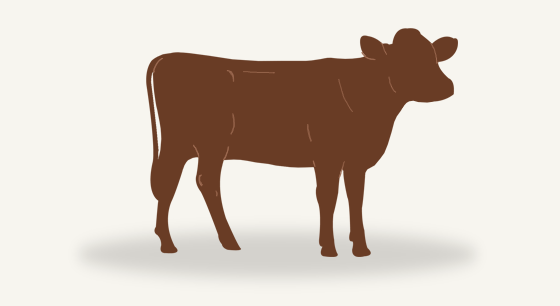
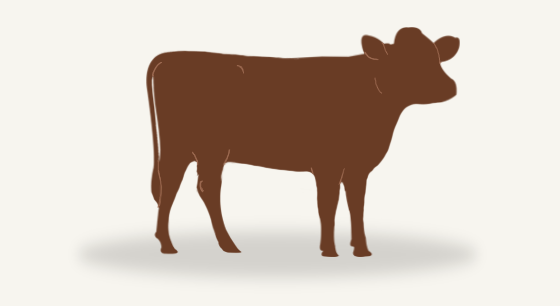
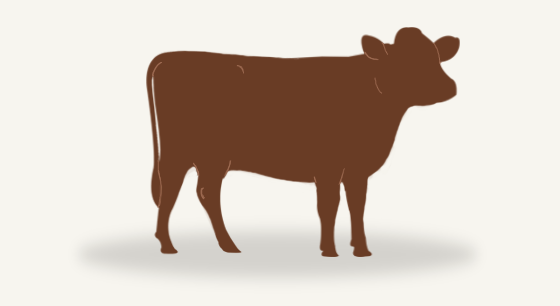
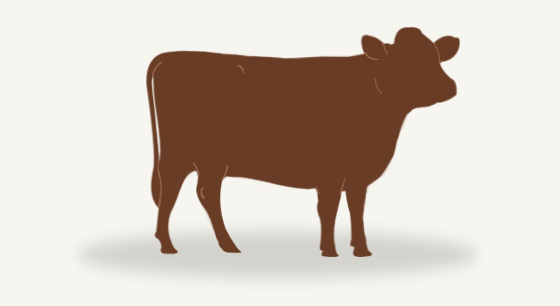
Slide the bar below to see how body condition affects cows’ productivity and the value of their weaned calves.

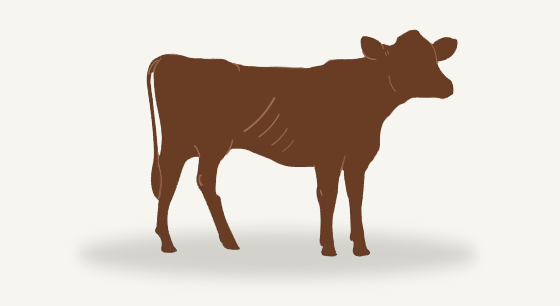
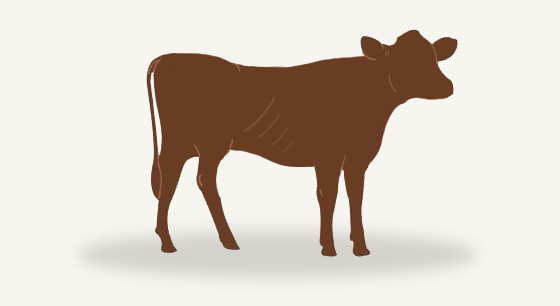
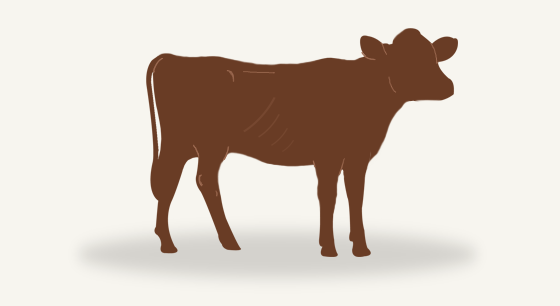
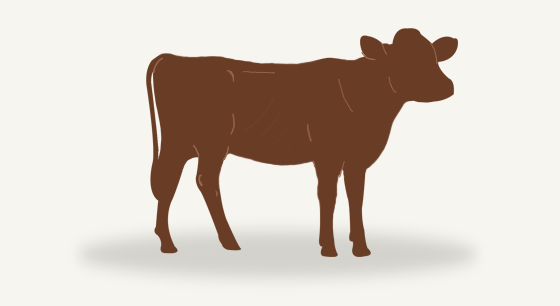
PROFIT: $$$$$
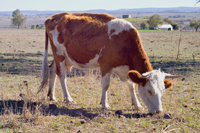
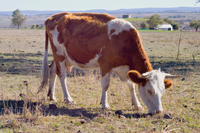
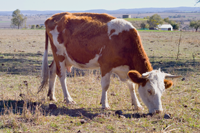
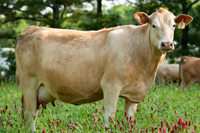
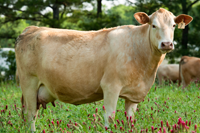
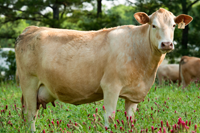
Increased fat cover over ribs, and ribcage is only slightly visible. Muscle tissue is nearing the maximum. Generally only the 12 and 13 ribs are individually distinguishable. There are obvious fat deposits behind the front shoulder. Areas on each side of the tail head are fairly well filled but not rounded.
The value of your weaned calves based on this BCS
Body Condition Scoring for Bulls
Body condition is essential for a bull’s fertility, stamina and overall longevity. Monitoring body condition score (BCS) should be a year-round practice, but fall processing is one of the best times to assess it and begin implementing feeding strategies to improve it.
- Under-conditioned bulls may lack the energy and strength needed for successful breeding.
- Over-conditioned bulls face risks such as mobility problems, heat stress and reduced performance.
During the breeding season, bulls can lose 100–200 lbs, so it’s important to reassess BCS during the bull breeding soundness evaluation (BBSE). This ensures any nutritional adjustments made earlier have achieved the optimal BCS before turnout.
Target Range:
- Ideal breeding season BCS: 2.5-3.0 (on a 5-point scale)
- Bulls below 2.5 may struggle to maintain weight and fertility.
- Bulls above 3.5 may be at higher risk for infertility*, lameness, overheating, reduced performance and cow injury due to excessive weight when mounting.
Visual Guide:
- BCS 1: Prominent ribs, hips and spine; no fat cover
- BCS 2: Slight fat cover; backbone and ribs still visible
- BCS 3: Smooth appearance; ribs covered but can still be felt
- BCS 4: Noticeable fat deposits; rounded appearance
- BCS 5: Excessive fat; mobility often impaired

What does it cost to increase a cow’s body condition from a 2 to a 3?
Scenario: Increase BCS from 2 to 3 in a 1400 lb cow in mid gestation in thermoneutral weather.
Instructions: Use the drop-down menu to choose a feeding period. Use the dropdown in the “Proportions of Diet” column to approximate the proportion of each feedstuff in the diet (the combined values of the four dropdowns must add to 100%). Manually enter the cost/lb of each desired feedstuff into the “Feedstuff” column. The rest of the cells will auto-calculate.
Disclaimer: This calculator is for demonstration purposes only and may not apply to your cow herd and feeding situation. To get a precise idea of what your cows need, please get your feed tested and then consult ration-balancing software (e.g., CowBytes) or a nutritionist.
In this scenario, the extra feed cost to improve condition from BCS 2 to 3 does not offset the extra value of the weaned calf crop but consider:
1. Alternative ways to improve condition at other times of the year:
- It is easier and more economical to add condition in early-mid gestation (summer/early fall) than in mid-late gestation (late fall/winter). Next year, if working to improve condition, consider supplying high quality feed or pasture at an earlier and more economical time of the season.
- Weaning calves from thin cows early will lower those cows’ energy needs.
2. Poor condition is a slippery slope:
- If poor condition is not improved, reproductive momentum will be lost: first the calving season will lengthen, subsequently weaning weights will decrease, and open rates will increase.
- Selling an open thin cull cow will not offset calf revenue from a cow that remains in the herd and calves on time for many years.
- Thin bred cows will continue to lose condition, which could develop into a significant welfare concern if not remedied.
NOTE: the following data is based on the “Number of Cows” and “Sale Price of Weaned Calves” values from the calculator above the Feed Cost Calculator; ie. changing those values will also affect this data.
**In some instances, a cow will not be able to physically consume enough of a particular feedstuff to get the nutrients required. For a 1400 lb cow on barley, maximum intake is about 33 lbs/day; for average-quality alfalfa grass hay and cereal silage, 29 lbs/day, and good-quality cereal straw 27 lbs/day. If any of your feedstuffs in the “Total lbs of feedstuff required/day” column are above those numbers, you need to readjust the proportions of each feedstuff in the diet.
**During periods of cold temperatures, a general rule of thumb is to increase the energy component of the ration by feeding additional grain or pellets at a rate of one pound per head per day for every -5°C that the temperature is below -20°C at mid-day. For example, if the afternoon air temperature was -35°C, feed an additional three lbs of grain or pellets per cow.
**Some types of extended grazing, such as swath grazing, can increase energy requirements by 18-21%.
**Cows in late gestation or lactation will have 20-45% higher energy and 40-80% higher protein requirements than cows in mid-gestation.
When do I body condition score?
One of the best times to body condition score is during fall processing or pregnancy checking. This will give you time to add condition on thinner cattle before winter sets in. Reproductive performance in the spring depends on nutritional planning in the fall.
The more often you body condition score throughout the year, the better you’ll be able to manage their nutrition to keep them at a BCS score of 3.0 year-round.
What should I do if my animals are underconditioned?
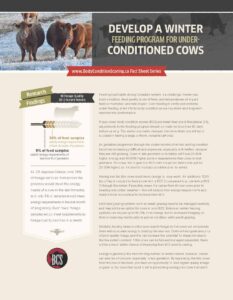
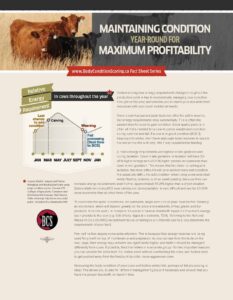
A 1,400-lb cow will require about 200 lbs of body weight gain to move from a body condition score 2.0 to 3.0. To make this change in 90 days requires 20% more energy than a cow that is maintaining condition; to do it in 60 days requires 30% more energy. It will be 20-30% more expensive to try and increase condition during the winter.
If you have animals at a body condition score of 2.0 or lower, you’ll need to manage them differently than you have been in order to add body fat and bring them up to a 3.0.
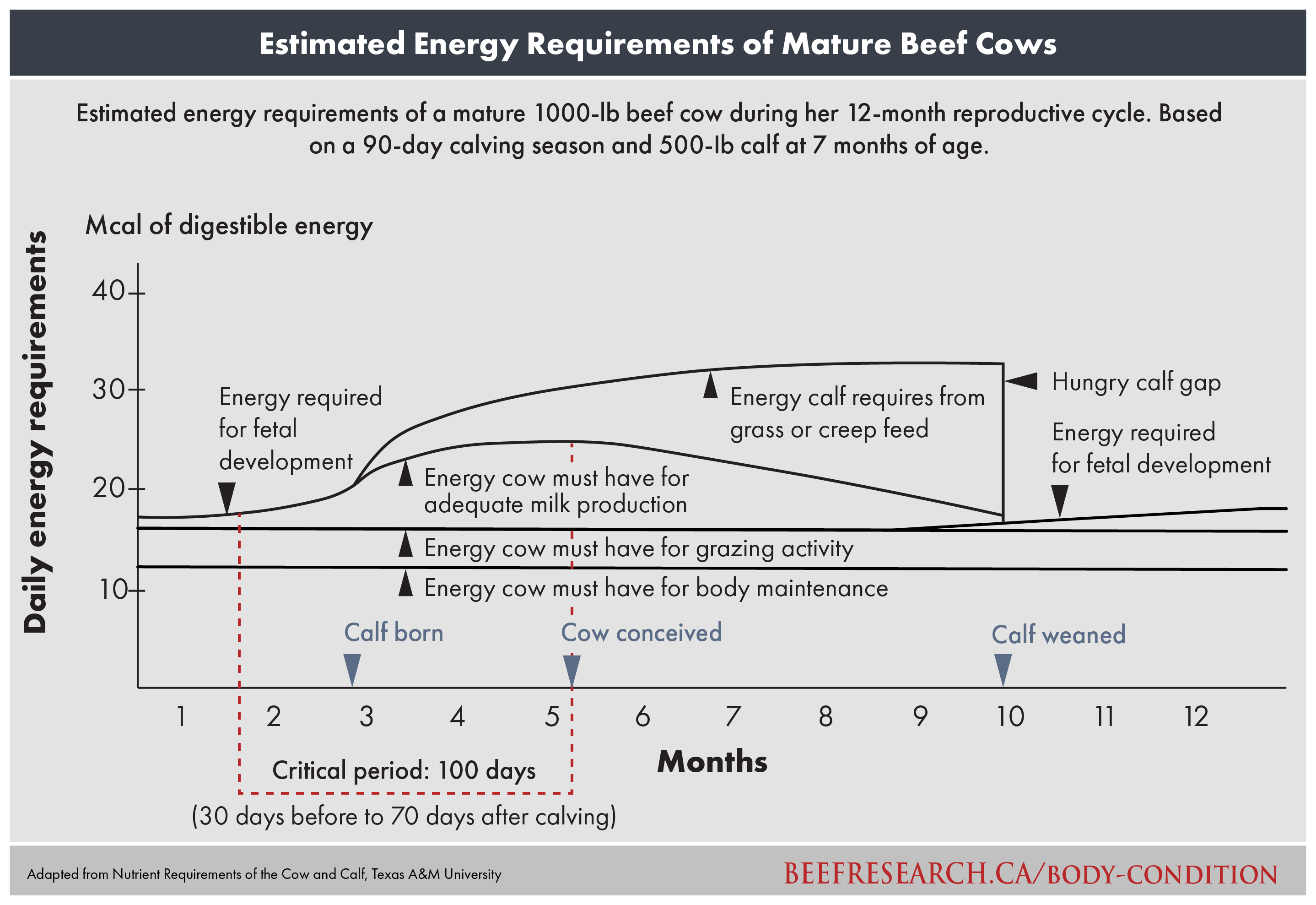
If cattle are thin when they come home from pasture in the fall, work to improve their condition right away. Cow maintenance requirements increase substantially (up to 40% more) during the winter and during late gestation.
When looking at a group of cattle, if a small number of them are thin, that may mean those few thin animals simply don’t fit a given environment or management system. Larger numbers of thin cattle within a group suggest the group doesn’t have enough feed or their feed is poor quality.
Feed testing is inexpensive and necessary to help ensure that your cattle are getting enough nutrition. Judging your forages based on their plant type, color, leaf content and knowledge of cutting time does not substitute for feed testing. Learn more about the value of feed testing and the nutritional needs of cows and heifers in each trimester.
Cattle that are thinner or fatter than the rest of the group should be sorted out and managed separately. Your winter-feeding groups might look something like this:
Group 1: Mature cows in good condition
These cows will fare quite well on average quality forage or extended grazing systems
Group 2: Bred replacement heifers/second calvers
These animals are still growing and need better quality feed to meet their requirements. They also don’t compete well with older cows for feed. They will need good quality forage and may require supplementation, especially during very cold weather.
Group 3: Thin and old cows
These cows need good-quality forage and will need some grain/pellet supplementation to get through the winter in good condition.
Considerations
- Nutrient levels of forages and grasses fluctuate widely from year to year (up to 25-30%), so feed testing is very important.
- If cattle are thin coming off grass in the fall, they will likely be thin going onto grass the following spring unless winter rations are adjusted to increase energy and protein.
- Cows reach peak lactation around six weeks post-calving. Energy and protein demands are highest at this time.
- A cow’s nutrient requirements (e.g., energy, protein, minerals) will increase about 30-40% percent with calving. Forage intake will generally increase by about 30% with calving.
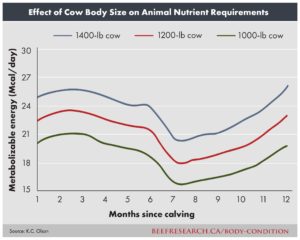
- Energy is usually the first-limiting nutrient (especially in winter), but protein should also be a consideration, especially when feeding low-quality forages.
- Swath grazing increases energy requirements by 18-21% over drylot feeding.
- Early grazing is not always the answer when winter rations dwindle. Early grazing of forages and grasses reduces individual plant energy reserves, affecting pasture growth for the season. Each day grazing is delayed in the spring adds two or more days of grazing in the fall.
- It is important to note that although increasing reproductive performance will generally increase profitability, striving for 100% may not be the most economical for your operation. The costs to increase reproductive efficiency from those last few percentage points to 100% may far outweigh the increased returns. If your operation’s reproductive efficiency is already high, it is recommended to determine a cost and return strategy for your operation before implementing changes to increase it further.
- An optimal BCS does not tell you everything you need to know about a cow. For instance, a cow that has an optimal BCS may still be deficient in copper or other minerals. Therefore, it is important to recognize that even though a cow may have an ideal BCS, there could still be underlying problems. This is why feed testing can be so important.
Downloads / Fact Sheets
A collaboration between:





With funding provided by:



And special thanks to:

- References
-
- Broring N., Wilton, J.W. and Colucci P.E. Body condition score and its relationship to ultrasound backfat measurements in beef cows. Canadian Journal of Animal Science. 2003. 83:3, 593-596.
- Smith M.S., Aguilar J.O.S., Nyhuis G., Ciriaco F.M., Zoca S.M., Strickland L., Stewart R.L., Duggin J.D., Fontes P.L.P. Relationship between phenotypic subcutaneous backfat thickness and spermiogram outcomes in young beef bulls. Translational Animal Science, Volume 9, 2025.
- Beverly, J.R. 1985. Reproduction in beef cattle as related to nutrition and body condition. Kentucky roundup of reproductive efficiency in beef cattle. pp.1-12.
- Hammack S.P., and Gill. R.J. 2009. Texas adapted genetic strategies for beef cattle X: Frame score, frame size and weight. Texas A&M AgriLIFE Extension Publication E-192.
- Herd D.B., and Sprott L.R. 2012. Body Condition, nutrition and reproduction of beef cows. Texas AgriLife Extension.
- Houghton, P.L., Lemenager R.P., Horstman L.A., Hendrix K.S. and Moss G.E. 1990. Effects of Body Composition, Pre- and Postpartum Energy Level and Early Weaning on Reproductive Performance of Beef Cows and Preweaning Calf Gain. J. Anim. Sci. 68:1438-1446.
- Lalman D. Nutrient Requirements of Beef Cattle. Oklahoma Cooperative Extension Service Publication E-974.
- Owens F.N., Dubeski P. and Hanson C.F. 1993. Factors that alter the growth and development of ruminants. J Anim Sci. 17: 3138-3150
- Parsons C.T. Body condition scoring: monitoring the beef cows energy reserves. Oregon State University Beef Cattle Library Publication BEEF001.
- Ringwall, K. 2009. BeefTalk: Four tons of calf is not easy to give up. North Dakota State University Extension Service.
- Siemens M. and VanderVelde K. Body condition, nutrition and reproduction of beef cows.
- Thurlow K. 2014. Body Condition Scores are a great tool for the beef cow herd. Michigan State university.
- Waldner C.L., García Guerra A. 2013. Cow attributes, herd management, and reproductive history events associated with the risk of nonpregnancy in cow-calf herds in Western Canada. Theriogenology 79(7), 1083–1094.
- Waldner C.L. 2014. Cow attributes, herd management, and reproductive history events associated with abortion in cow-calf herds from Western Canada. Theriogenology 81, 840–848.
- Waldner C.L. 2014. Cow attributes, herd management and environmental factors associated with the risk of calf death at or within 1 h of birth and the risk of dystocia in cow–calf herds in Western Canada. Livestock Science 163, 126-139.
- Walker J. and Perry G. Cow Condition and Reproductive performance. South Dakota State university department of animal and range sciences.
- Whitman, R.W. 1975. Weight change, body condition and beef-cow reproduction. Ph.D. Dissertation. Colorado State Univ., Fort Collins.
Feedback
Feedback and questions on the content of this page are welcome. Please e-mail us at [email protected].
Expert Review
This content was last reviewed March 2026.